
Not All Mountains Are Made of Rock
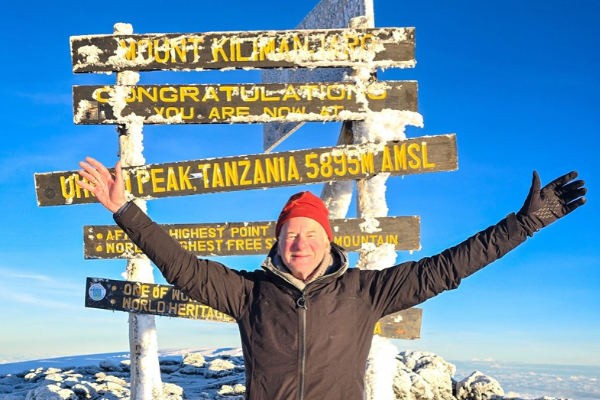 Stratton Horres at the summit of Mount Kilimanjaro
Finding Purpose After Cancer
by Stratton Horres
For most of my adult life, I knew exactly who I was. I was a trial lawyer in Dallas. For more than four decades, my identity was built on high-stakes cases, long hours, and the steady pressure of a demanding profession.
I handled some of the most difficult matters imaginable—mass shootings and kidnap-and-ransom cases—where the margin for error was small and the stakes were enormous. It was a life defined by intensity, structure, and purpose.
Then cancer entered the picture. In a matter of months, everything changed. The career I had spent 42 years building came to an abrupt end. There was no gradual transition, no carefully planned retirement—just a sudden stop.
My focus shifted overnight to treatment, surgery, and recovery. But beneath the physical battle was something I hadn’t expected: the loss of identity. When you have defined yourself by your work for decades, losing that role creates a kind of silence that is hard to describe.
Not all mountains are made of rock. Some are diagnoses… Some are the unexpected moments that force us to confront who we are without the roles we’ve relied on for years.
I was no longer walking into courtrooms. No longer preparing for trial. No longer introducing myself as the person I had always been. And without that identity, I was left with a difficult question: Who am I now?
In the early months after surgery, I searched for something—anything—that would give me a sense of forward motion again. Not another career, but something that felt meaningful. Something that reminded me I was still capable of moving forward.
That search led me, somewhat unexpectedly, to Mount Kilimanjaro. At 19,341 feet, Kilimanjaro is not a small undertaking, especially later in life. It requires preparation, discipline, and a willingness to endure discomfort and uncertainty.
But what drew me to it wasn’t the challenge itself. It was the clarity. On a mountain, the rules are simple. You either keep going, or you turn back. That simplicity was exactly what I needed.
Training began slowly. Long walks. Incline climbs. Small, incremental progress. There were no deadlines, no external pressures—just the quiet commitment to take the next step.
When I finally stood on the slopes of Kilimanjaro, I realized something important. The climb wasn’t really about reaching the summit. It was about proving to myself that forward motion was still possible.
There is a phrase climbers use on Kilimanjaro: “pole pole”—slowly, slowly. It is how you reach the top. It is also how you rebuild a life after cancer.
On a mountain, the rules are simple. You either keep going, or you turn back.
Not all mountains are made of rock. Some are diagnoses. Some are endings. Some are the unexpected moments that force us to confront who we are without the roles we’ve relied on for years.
Cancer was my mountain. Losing my career was another. But like any climb, the way forward was the same: one step at a time.
I did not choose the mountain that came into my life. But I did choose how to respond to it. And sometimes, that choice—to keep moving forward, even slowly—is enough.
Keep climbing.
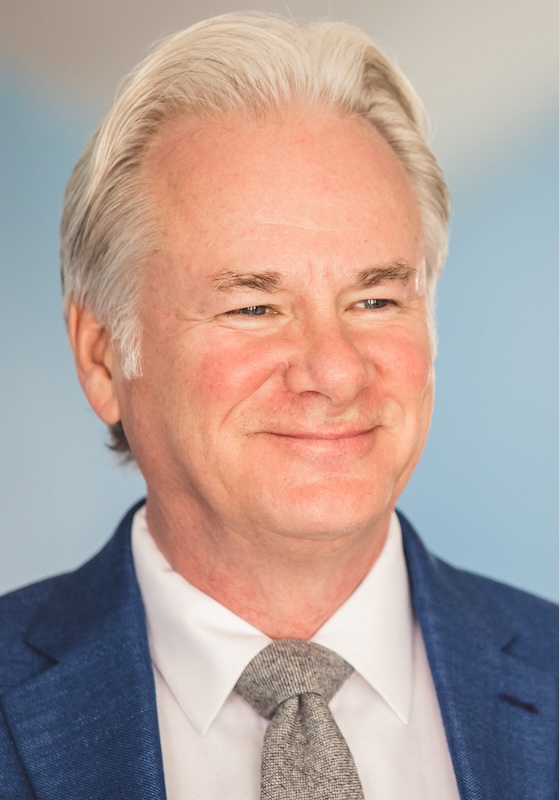
Stratton Horres is a three-year prostate cancer survivor and retired civil trial attorney living in Dallas, Texas. He has written/co-written five books. This includes his upcoming book From Crisis to Kilimanjaro, which is both a memoir and guide and will be released on October 20, 2026.
After receiving his cancer diagnosis, he redirected his focus from work to traveling with his wife, Debbie, and embarked on a spiritual quest traveling around the world. Learn more about Stratton on StrattonHorres.com.