
Full Circle
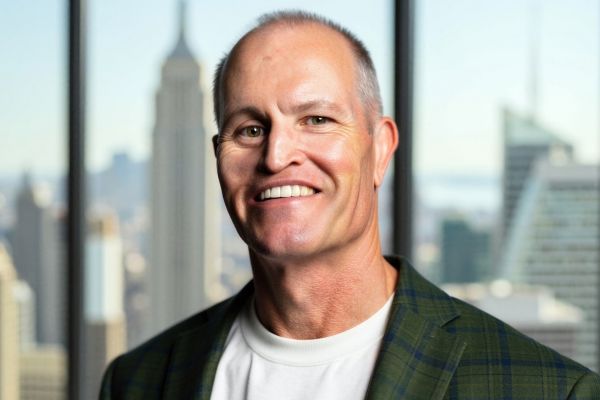
by Terry Healey
My surgical team saved my right eye. For that, I had incredible gratitude.
I awoke from an 11-hour surgery at University of California, San Francisco to find that my surgeon had removed not only half of my nose but also half of my upper lip, muscle and bone from my right cheek, the shelf of my right eye, six teeth, and part of my hard palate. I was attached to my chest with a delto-pectoral flap because so much tissue had been removed from my face.
Leading up to that surgery my life was smooth sailing. I was a junior at UC Berkeley. A few years earlier while in high school, I was even the homecoming prince.
But six months prior to that surgery, my right nostril began to flare out. I felt a bump pushing against the inside of my right nostril.
It turned out that I had a malignant maxillary tumor, a rare fibrosarcoma. The bulk of the tumor was removed during the biopsy, but I underwent surgery to clear any remaining tumor cells. Fortunately, the procedure was minor, and I returned to classes looking like I had been in a fight with someone, not something.
I started taking life for granted again. But as the new school year began, I discovered a new lump in the same nostril. Numerous specialists confirmed that my tumor had procreated. Prescribing more surgery, my doctor warned me that I might lose part of my nose and my right eye, but his main concern was saving my life. The notion of disfigurement was devastating.
As I re-entered the world after five surgical procedures to confirm I had clear margins, my life suddenly seemed so different. I noticed people staring and children pointing—and sometimes giggling—at me. My hospital room had protected me; outside of it, I was vulnerable and exposed. Of course, I cared what other people thought of me; I was 21 years old.
During the following months, I encountered many uncomfortable stares that left an indelible mark on my psyche. Even worse, extensive radiation treatments, followed by 48 hours of iridium seed implants began to shrink my facial tissue, magnifying my deformity. My self-esteem sank increasingly lower.
After five years and 20+ reconstructive surgeries later, I was struggling with insecurity. During my last procedure, I met a woman receiving treatment for cervical cancer at my hospital. We began dating, but after hearing me ask how she felt about my looks, she ripped into me. The bulk of my problem, she informed me, was not my physical appearance, but my insecurity. Her honesty helped me realize that my internal scars were far more disfiguring than my physical ones on the outside ever were.
Once I got over the devastation that she was no longer interested in me, I began to realize how lucky I was that she had highlighted my greatest weakness. With gratitude for her powerful words and a newfound perspective, I realized that surgery wasn’t something I could control. What I could control was focusing on rebuilding what was inside.
I began examining myself from the inside out and used prayer and support from loved ones to boost my spirit and self-esteem. I found the courage to share my vulnerabilities in support groups. That was liberating.
When I eventually began to feel content with who I was as a person again, I realized I had transformed myself into someone I was proud of because of the wisdom I felt I gained along the way. Over time, no one seemed to stare at me. I guess when you carry yourself with confidence, people don’t notice our differences as much.
Gratitude, life perspective, and empathy are the gifts that came out of my ordeal. I wouldn’t trade my experience for anything. I wouldn’t wish it on anyone either. But my battle scars remind me every day of the wisdom and resilience I’ve gained and the purpose I have found.
Terry is a speaker and author, most recently, of The Resilience Mindset: How Adversity Can Strengthen Individuals, Teams, and Leaders, as well as At Face Value, his memoir. For more information, visit TerryHealey.com.
Everyone has a unique story to share. Do you want to share your survivor story?
We consider a cancer survivor to be anyone living with a history of cancer –
from diagnosis through the remainder of life.
Here are our submission guidelines.