
O Is for Organize Your Life

by Richard C. Frank, MD
Organize your treatment.
Choose caregivers whom you like and trust. Choose a treatment center that fits with your practical needs as well as your preferences. Get a second opinion. The more life threatening a cancer, the greater the need to hear more than one opinion. Choose one oncologist to be your most trusted adviser and ally to help you make the best decisions at every juncture of your cancer journey; you should feel that you have good and open communication with this physician.
Organize your loved ones.
On hearing the word “cancer,” you will think of yourself and you will think of your loved ones. You will immediately wonder how your spouse or significant other, children, siblings, and parents will handle the news. For the sake of everyone involved, seek the counsel of professionals on how to communicate effectively with your loved ones about your situation. The people in your life may also need the support of a professional counselor at some point. The more united your loved ones are behind you, the stronger you will be throughout your ordeal with cancer.
Address advance healthcare directives through a living will and a power of attorney document so that your wishes will be respected in the event that you will not be able to direct them.
Organize your support system.
You will need the sturdy support of good friends and loved ones to cope with cancer. Rather than having family and friends give you well-meaning but often overwhelming and distracting advice about what you should and should not do to fight cancer, give them concrete suggestions about how they can show their support. Ask that they help in taking care of household chores, meals, childcare, transportation to and from treatment, and anything else you may need to help make your life flow smoothly during and after the grind of cancer therapy.
The ultimate goal is for you to have your life so organized that you can deal with cancer treatment almost on autopilot.
Organize your mind.
Long-term cancer survivors uniformly state that trying to maintain a positive mental attitude is essential to their survival. But there will be down times, both physical and mental, and it is okay to give in to them for limited periods. As my mother used to say to me, “Only a fool is happy all the time.” Don’t let others badger you to be positive and upbeat around the clock, as this will probably only prevent you from expressing your true feelings, leading to worse depression. So surround yourself with people who truly care about you and know how you like to communicate. Reduce stress in your life as much as possible and minimize interactions with negative people so that you can focus on the critical task at hand. Pursue spiritual and religious tranquility. Take advantage of hobbies, music, art, yoga, and other activities and techniques to promote relaxation and peace of mind. Celebrate good results. Laugh as much as possible.
Organize your work.
You and your employer will want to know how much time you will need to deal with cancer. You may need to work part-time or perhaps sometimes from home, if that is feasible. If arduous treatments are necessary, consider short-term and long-term disability, and know the pros and cons of these. Do not try to maintain a full work schedule and go through rigorous cancer treatments; you will more than likely end up exhausted, compromising both your work and your treatment.
Organize your finances.
First, make sure that your medical insurance will cover the prescribed treatments. Your oncologist’s office will be able to verify this. Avoid hospitals that are out of your insurance network unless it is essential that you receive care at such a facility; in these instances, letters from your doctors on the necessity of such treatment usually results in insurance coverage. Second, if you are the bread-winner in your family, make certain that your loved ones will be provided for through clear documentation. Now is a good time to get your financial situation in order.
Organize your time.
The ultimate goal is for you to have your life so organized that you can deal with cancer treatment almost on autopilot. This will also enable you to have time for yourself, which is an essential component of the recovery process. Once you have taken control of your life as a cancer survivor, you will likely never return to taking each day and the gift of life for granted.
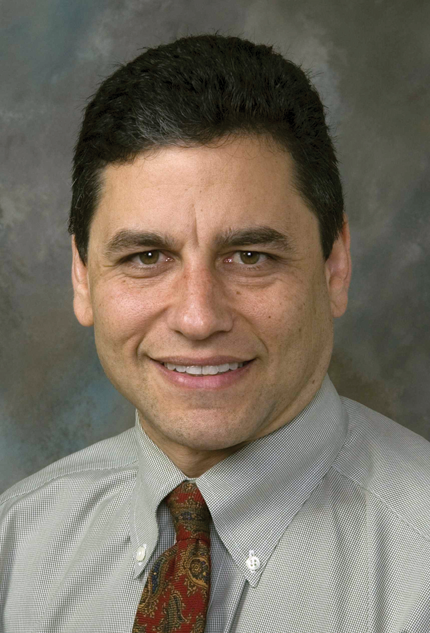
Dr. Richard Frank is director of cancer research at Whittingham Cancer Center at Norwalk Hospital in Norwalk, CT, and medical director at Mid-Fairfield Hospital in Wilton, CT.
Excerpted with permission from Fighting Cancer with Knowledge & Hope, by Richard C. Frank, MD, copyright© 2009 by Richard C. Frank. Published by Yale University Press.
This article was published in Coping® with Cancer magazine, January/February 2010.